
10 Trolling Motor Battery Charging Best Practices Most Boaters Get Wrong
10 Trolling Motor Battery Charging Mistakes That Are Killing Your Battery Life
If your trolling motor seems to lose power faster every season, charging habits are almost always part of the problem. After each use, charge the trolling motor battery fully when possible to avoid sulfation and premature aging from repeated partial discharges, yet many of us still toss the boat on the trailer and plug in "when we get to it." In this guide, we walk through proven trolling motor battery charging best practices and show real charger and battery examples that make getting it right much easier.
Key Takeaways
| Question | Short Answer & Useful Links |
|---|---|
| What is the best way to charge a trolling motor battery after a fishing trip? | Charge it fully the same day with a smart marine charger. Our Marine Battery Maintenance Guide explains why full, prompt charges prevent sulfation. |
| Which charger size should I use for my trolling motor battery? | A practical rule is about 10% of battery capacity, for example, a 10 A charger for a 100 Ah battery. Compare 1 bank options in our 1bank marine battery charger overview. |
| Do I need an on-board charger for a trolling motor setup? | On-board chargers simplify daily charging for boats kept rigged and ready. See how to choose one in Choosing the Best On-Board Boat Battery Charger. |
| What if I only use my trolling motor occasionally? | Use a low-amp maintainer to keep the battery topped up safely. The Guest 2603 3 A maintainer is a good example for this kind of use. |
| How do I protect my battery during winter storage? | Store around 50% state of charge in a cool, dry place and give monthly top-ups. Our detailed tips are in the Marine Battery Maintenance Guide. |
| Can I use a standard automotive charger on a trolling motor battery? | We recommend marine-rated smart chargers instead. They handle vibration, moisture, and multi-stage charging better, as outlined in our Guest marine charger lineup. |
Know Your Trolling Motor Battery Type Before You Charge
Best practice starts with knowing exactly what you are charging. Most trolling motors run on 12 V batteries made from flooded lead acid, AGM, gel, or increasingly, lithium (LiFePO4) batteries, and each chemistry prefers a slightly different charging profile.
Marine chargers typically follow a 3-stage profile: Bulk, Absorption, and LiFePO4 batteries can skip or shorten the Absorption stage in practice. If you use AGM or gel, using a charger with selectable profiles is especially important so you do not overcharge. or undercharge.
Deep-cycle batteries built for trolling motors
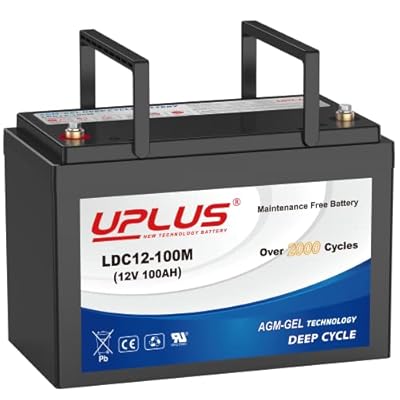
For long run times and repeated deep discharges, we recommend a purpose-built deep cycle or dual purpose batteries. The UPLUS 12 V 100 Ah Deep Cycle Battery, for example, is sized and rated for trolling motor duty and benefits from proper multi-stage charging.

Dual-purpose options for cranking and trolling
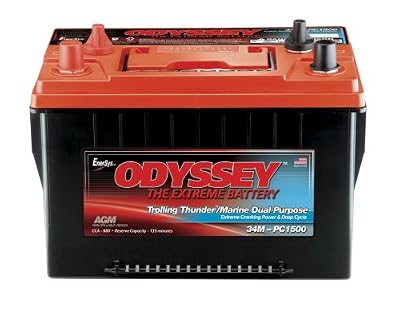
If you want one bank to serve both start and trolling duties in smaller boats, a true dual-purpose battery is a better choice. The Odyssey 34M?PC1500ST Trolling Thunder Marine Dual Purpose Battery is designed to handle both high cranking loads and deep cycling, which means your charger must be smart enough to manage both demands without overcharging.

Size Your Battery And Charger Correctly For Your Trolling Motor
Battery capacity and charger size go hand in hand. Minn Kota recommends sizing for at least 110 Ah per trolling motor battery to achieve roughly 6–8 hours of runtime, and that capacity needs an appropriately sized charger to be ready again by the next morning.
A practical charging guideline is to use about 10% of the battery's capacity as charging current, for example, around 10 A for a 100 Ah battery. For larger 24 V or 36 V trolling setups built from multiple 12 V batteries, we suggest multibank onboard chargers so each battery gets its own controlled charge.
Comparing common charger outputs for trolling batteries
| Charger Example | Output | Best Use Case |
|---|---|---|
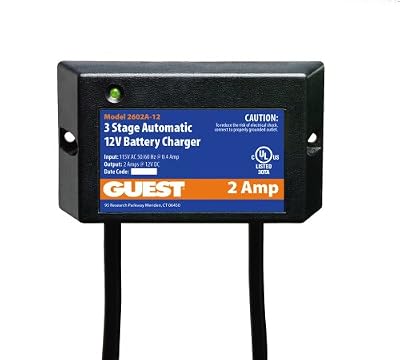
| Guest 2602A Maintainer | 2 A, 12 V single bank | Small batteries, long-term maintenance |
| Guest 2606A Portable | 6 A, 12 V single bank | Moderate-sized trolling batteries, overnight recovery |
| Guest 2612A Portable | 10 A, 12 V single bank | Larger banks or faster turnaround between trips |

Choose The Right Type Of Charger For Trolling Motor Use
Trolling setups can use portable chargers, on-board chargers, or small maintainers. We generally advise onboard smart chargers for fishing boats that live in the water or stay fully rigged, and portable chargers or maintainers for small skiffs and casual weekend boats.
Smart marine chargers constantly monitor voltage and adjust output through Bulk, Absorption, and Float stages. This protects trolling batteries from chronic undercharging and overcharging, both of which shorten runtime and lifespan.
On-board waterproof chargers
For permanent installation, the ProMariner ProSport HD 12 Amp Dual Bank Waterproof Marine Battery Charger is a strong example of a trolling-friendly charger. Dual banks allow you to charge a dedicated trolling battery and a cranking battery separately without constant cable swapping.


Smart waterproof single bank chargers
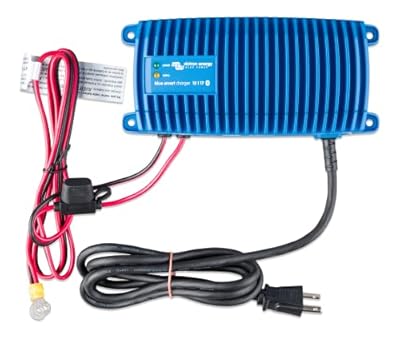
If you trailer your boat and want a compact, rugged charger you can connect after each trip, the Victron Energy Blue Smart IP67 Marine Battery Charger (12 V, 13 A) is a premium option. It offers Bluetooth monitoring and a fully sealed housing that stands up to spray and humidity common around trolling setups.

Use Maintainers Correctly For OffSeason And Infrequent Use
Many trolling motor batteries fail not on the water but in the driveway during months of neglect. If you only fish occasionally or store your boat over winter, a maintainer is one of the most effective tools you can buy.
Maintainers deliver a low, controlled current and switch to float when the battery is full. This keeps the state of charge healthy without boiling off electrolyte or cooking AGM plates, which is essential for trolling batteries that sit on the trailer for weeks at a time.
Guest 2603 and 2602A: low amp marine maintainers
The Guest 2603 Marine Battery Maintainer/Charger is a 12 V, 3 A single-output maintainer listed at around $147.00. It is well-suited to medium trolling batteries that you want to keep topped off between outings.
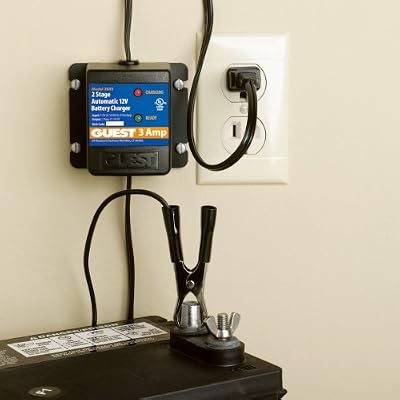
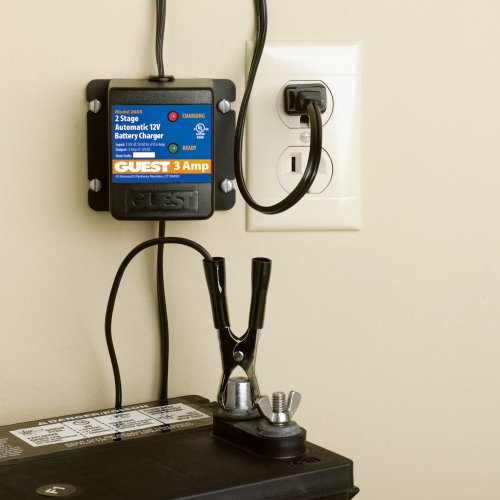
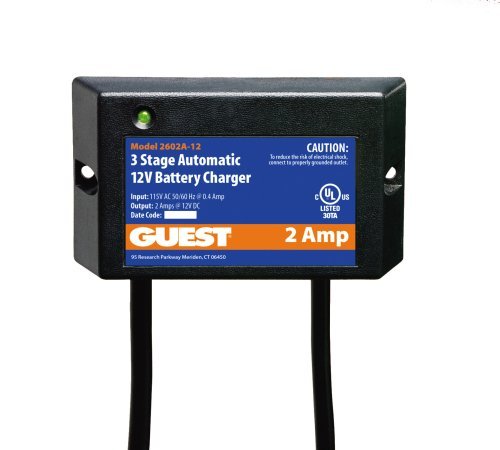
If your trolling motor battery is smaller or you mainly need gentle storage charging, the Guest 2602A?12 Marine Battery Maintainer/Charger offers 2 A at 12 V for about $99.99. Both units are marine-rated, which we prefer over generic automotive maintainers around saltwater or damp docks.
Pick Portable Chargers That Match Your Fishing Routine
If you move your charger between boats, or you store the boat away from a dedicated power point, a portable marine charger is often the most practical choice. For trolling motor users, portability also means you can keep charging flexible when road tripping to new lakes.
We recommend choosing portable units with clear charge indicators, spark-proof connections, and marine-appropriate casings. These features reduce the risk of mistakes when you connect to trolling batteries in low light or cramped storage compartments.
Guest 2612A and 2606A: Portable marine chargers with punch
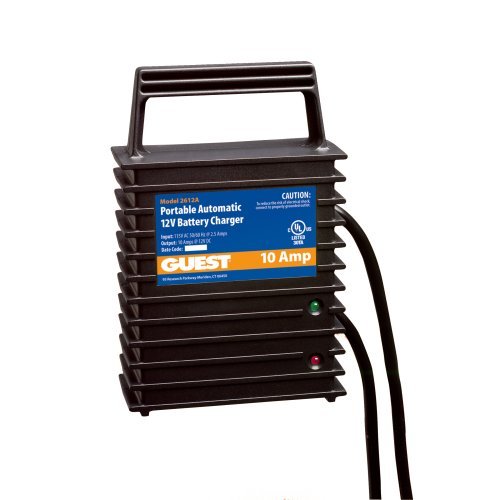
The Guest 2612A Portable Marine Battery Charger provides 12 V at 10 A from a single bank for about $79.99. This is a solid match for a typical 100 Ah trolling battery when you want it recharged overnight.
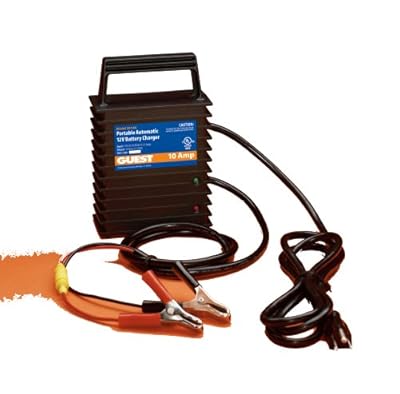

The Guest 2606A Portable Marine Battery Charger steps down to 6 A at 12 V with a single output and lists at around $96.49. We like this model for mid-size trolling setups, where you want more than a maintainer but do not need the speed or heat of a full 10 A output.

Waterproof And Harsh?Environment Charging For Open Boats
Trolling motors often live on open bow decks where water, spray, and condensation are unavoidable. If your charger is permanently installed in a wet locker or under a leaky hatch, a waterproof rating is not optional.
Charge within a comfortable ambient temperature range, roughly 50°F to 86°F (10°C to 30°C), to maximize charging efficiency and battery health. Combining reasonable temperatures with waterproof construction keeps both your charger and trolling battery safe over years of use.
Battery Tender Waterproof 800: compact and sealed
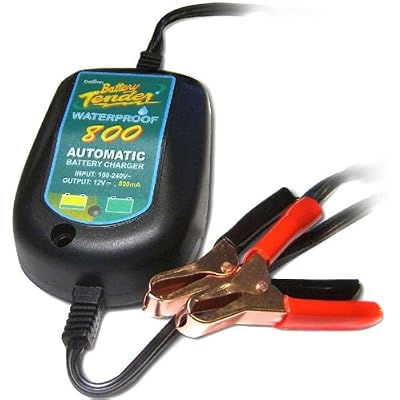
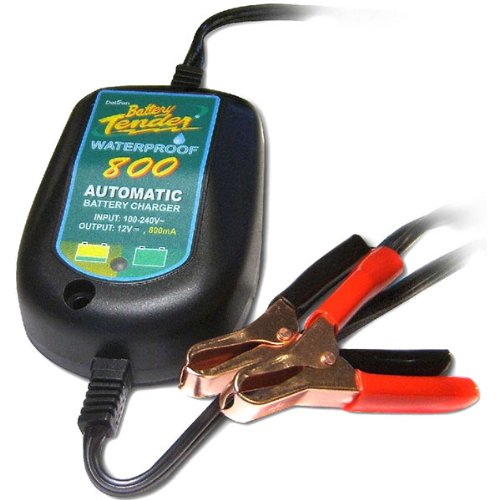
The Battery Tender Waterproof 800 Charger is a small, fully sealed 12 V charger designed for exactly these conditions. Priced around $55.95, it outputs 800 mA and is ideal as a maintenance plus charger for small trolling setups or as a backup on longer trips.
Battery Tender Jr. for garages and covered storage
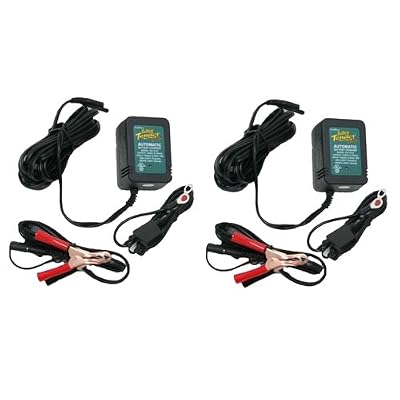
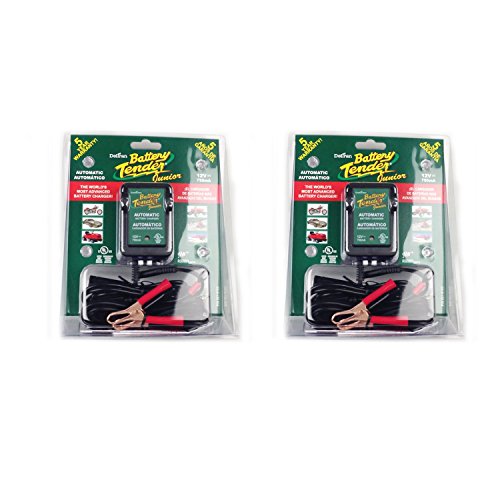
For boats stored in a garage or shed, the Deltran Battery Tender Jr. Model 021?0123 is another proven option. Sold in a two?pack for about $88.90, each 12 V, 750 mA unit can maintain one trolling battery and one cranking battery in parallel, which keeps the whole fishing rig ready for the next weekend.

7. Daily Trolling Motor Charging Routine After Each Trip
Day?to?day habits matter more than any individual product. After each use, we recommend following a simple repeatable routine that keeps trolling batteries ready and healthy.
First, let hot batteries rest for 20–30 minutes after a long run so surface temperature comes down. Then connect your smart charger, confirm correct polarity and secure clamps, and leave it plugged in until the charger indicates Float or fully charged status.
Step?by?step checklist for every outing
- Inspect trolling battery terminals for looseness or corrosion before connecting the charger.
- Connect positive to positive and negative to negative, then plug in the charger.
- Verify the correct battery type or mode is selected on the charger if available.
- Allow the charger to complete the full charge cycle instead of unplugging early.
- Check resting voltage the next morning, around 12.70 V or higher for lead?acid indicates a full bank.

8. Long?Term Storage And Off?Season Charging Best Practices
When trolling season ends, how you store your batteries determines how strong they will be next spring. For long?term storage, store trolling?motor batteries with about 50% SOC in a cool, dry place and avoid deep discharge during storage.
We also suggest removing heavy leads, cleaning terminals, and labeling banks so you reconnect them correctly in the spring. Smart maintainers can be left connected and powered, but conventional automotive chargers should never be left on unattended for months.
Using guides and resources for storage planning
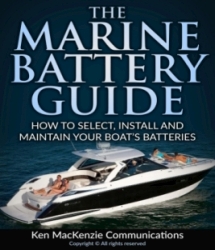
Our Marine Battery Maintenance Guide dives deeper into storage temperatures, SOC targets, and monthly maintenance checks. Combining that guidance with a small maintainer, such as the Guest 2603 or Battery Tender Jr, will prevent the "dead trolling battery in April" surprise.


9. Safety Tips When Charging Trolling Motor Batteries
Trolling setups pack a lot of energy in a small space, so safe charging habits are non?negotiable. We always recommend charging in a well?ventilated area and keeping flames, sparks, and smoking materials far from flooded lead?acid batteries that may vent gas.
Before connecting any charger, inspect cables for nicks, crushed insulation, or loose clamps. Replace damaged components promptly, since a short across a trolling battery can deliver enough current to start a serious fire.
Quick safety checklist for every charge cycle
- Turn off all trolling and boat electronics before connecting the charger.
- Connect to the battery terminals first, then plug in the charger to AC power.
- Use only marine?rated chargers around bilges and damp storage spaces.
- Route charger leads to avoid foot traffic and sharp edges around the boat.
- Unplug from AC before disconnecting leads from the battery.

10. Putting It All Together With A Smart Charging Setup
The best trolling motor charging practice is usually a combination of the right battery, a capable charger, and a routine you can actually follow every time you use the boat. That is why we like simple but robust marine?rated systems that do most of the thinking for you.
In many cases, one quality on?board or portable charger, plus a small maintainer for storage months, is enough to cover the full life of a trolling battery bank. The key is to match current output, waterproofing, and smart features to how and where you fish.
Example “good, better, best” charging setups
- Good: Portable 6 A charger like the Guest 2606A for a single 12 V trolling battery used on weekends.
- Better: 10 A portable charger plus a dedicated maintainer, such as the Guest 2603 or Battery Tender Jr, for year?round readiness.
- Best: Multi?bank waterproof on?board charger like the ProMariner ProSport HD for 24 V or 36 V trolling systems, paired with smart storage routines from our maintenance guide.


Conclusion
Trolling motor battery charging best practices are not complicated, but they do require consistency. Choose the right battery chemistry and capacity for your fishing style, pair it with a correctly sized marine?rated charger, and follow a simple after?trip and storage routine.
By keeping your batteries charged promptly, staying within recommended temperatures, and using maintainers during idle periods, you can extend battery life and enjoy reliable trolling power all season. The chargers and batteries we have highlighted provide concrete, proven options to build a setup that fits your boat, budget, and time on the water.